The Hidden Costs of Probate in Florida
The Hidden Costs of Probate in Florida
Losing a loved one is an emotional and life-changing experience, and unfortunately, the legal process of probate that follows can add significant stress and complexity to an already difficult time. In Florida, navigating probate can often feel overwhelming, not just because of the emotional burden but because of the financial costs involved. While the goal of probate is to ensure that the deceased’s estate is properly managed and distributed, it’s important to understand the hidden costs that can accumulate during the process.
In this article post, we will explore the hidden costs of probate in Florida, provide insight into how long probate takes, and discuss steps you can take to minimize these costs and make the process as smooth as possible.
What is Probate and How Long Does it Take in Florida?
Probate is the legal process through which a deceased person’s estate is administered. This process involves authenticating the will, appointing a personal representative (often the surviving spouse), identifying and valuing assets, paying debts, and distributing the remaining property to the beneficiaries.
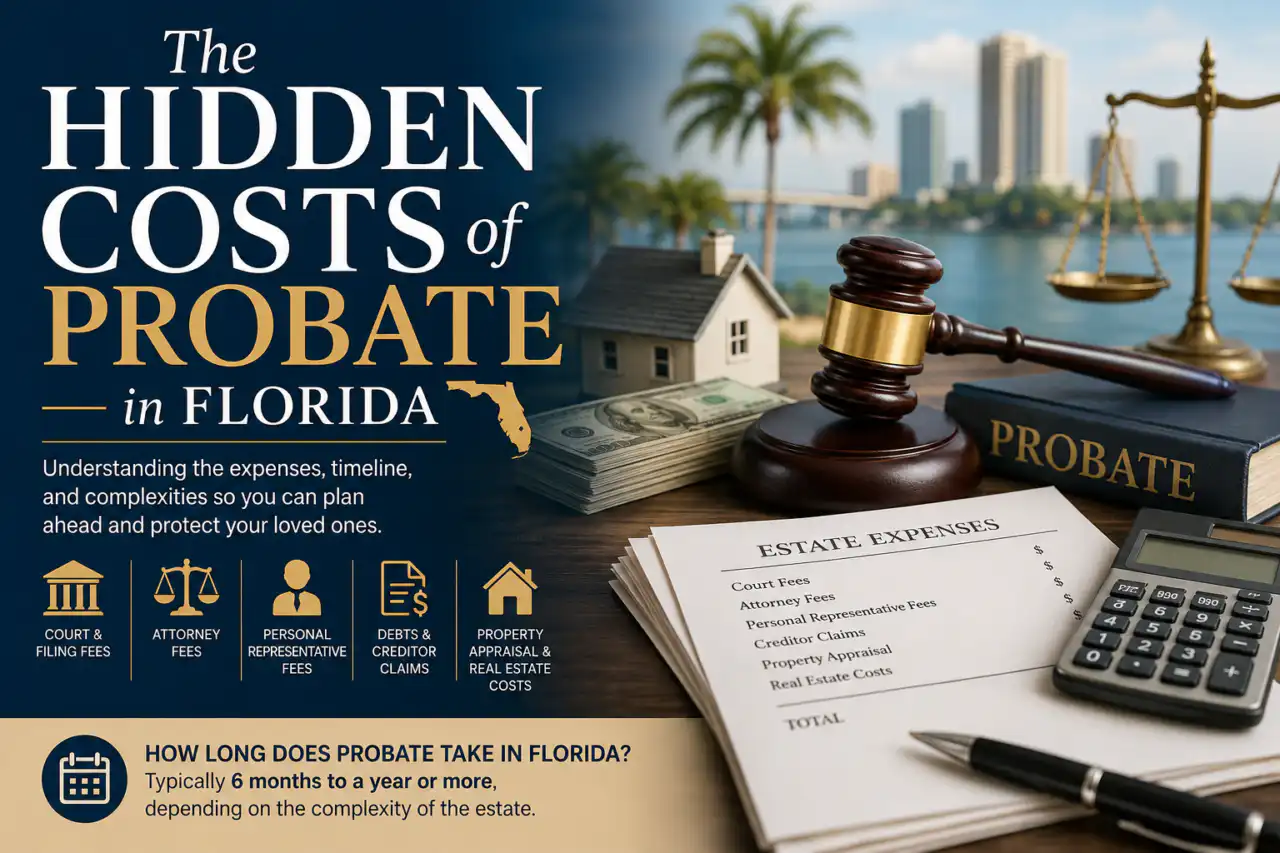
The timeline for probate in Florida varies depending on several factors, including the complexity of the estate, the size of the estate, and whether or not there are any complications or disputes. Typically, the probate process can take anywhere from six months to a year or more.
While Florida law allows for a relatively streamlined probate process for small estates or estates with few assets, the timeline can be much longer for larger, more complicated estates. This means that the estate may be tied up for an extended period, which can complicate financial matters during a difficult time.
Hidden Costs of Probate in Florida
Probate in Florida can come with significant costs that you may not fully anticipate. Understanding these costs upfront can help you plan and avoid surprises as you navigate the process.
- Court and Filing Fees
The probate process involves filing multiple petitions, motions, and documents with the court, each of which incurs a fee. The cost of filing documents can vary depending on the county in Florida, but it is important to be aware that these costs can quickly add up.
- Filing Fees: These are charged for submitting documents to the court, including the petition to open probate, notices to creditors, and other court filings. These fees are typically a few hundred dollars but can be higher depending on the complexity of the case.
- Miscellaneous Court Costs: Additional costs may arise, such as fees for scheduling hearings, court appearances, or any additional legal actions required to complete the probate process.
- Attorney Fees
One of the most significant costs associated with probate is hiring an attorney to guide the process. Florida law does not set a specific rate for probate attorney fees, so these can vary depending on the complexity of the estate and the attorney’s experience. Most probate attorneys charge either an hourly rate or a flat fee based on the size of the estate.
- Hourly Fees: Some attorneys charge by the hour, depending on the complexity of the estate and the attorney’s experience.
- Percentage-Based Fees: Florida law allows attorneys to charge fees based on a percentage of the estate’s value, typically ranging from 3% to 5% of the estate’s value. For larger estates, this can amount to tens of thousands of dollars in fees.
The complexity of your loved one’s estate will determine whether an attorney is necessary for the entire process, but in most cases, especially if there are disputes or complexities, hiring legal counsel can be one of the largest costs.
- Personal Representative Fees
The personal representative, often the surviving spouse or child, is responsible for managing the estate. Florida law allows the personal representative to be compensated for their time and effort in administering the estate.
- Personal Representative Fees: These fees are typically calculated based on a percentage of the estate’s value, similar to attorney fees. The percentage can range from 3% to 5%, depending on the estate’s value, which can be a significant amount for larger estates.
While you may not need to pay yourself (if you are the surviving spouse acting as the personal representative), these fees still represent an additional financial burden if someone else is appointed to manage the estate.
- Debt and Creditor Claims
Before distributing assets to beneficiaries, any debts or creditor claims must be paid. In Florida, creditors have a limited time to file claims against the estate, but if there are significant outstanding debts, the costs of settling those claims can add up quickly.
- Outstanding Debts: Mortgages, credit card debt, medical bills, and other obligations may need to be paid out of the estate before the remaining assets can be distributed. If there is a lack of liquidity in the estate, the personal representative may be forced to sell assets to cover these debts.
- Tax Liabilities: If the estate is large enough, there may also be estate taxes owed, which can further deplete the estate’s assets. The personal representative may need to sell off assets or take on the responsibility of paying taxes if the estate cannot cover them.
- Property Appraisal and Real Estate Costs
If the estate includes real property, there will be additional costs for appraisals, property maintenance, and potential sales of real estate.
- Appraisals: A professional appraisal of real estate or personal property is often necessary to determine the value of assets for probate. These costs can range from several hundred to several thousand dollars, depending on the number and complexity of assets.
- Real Estate Maintenance and Sale: If the family home or other property needs to be sold, the costs involved in preparing and selling the property can add up. These may include realtor fees, closing costs, repairs, and maintenance to ensure the property is ready for sale.
How to Minimize Probate Costs in Advance
While probate costs are often inevitable, several steps taken in advance minimize these expenses and ensure a smoother process:
- Create a Well-Structured Estate Plan
One of the most effective ways to reduce probate costs is to create a comprehensive estate plan before your loved one’s passing. This includes:
- A Will: Ensure that a will is clearly written and up-to-date to minimize ambiguity during probate.
- A Trust: A revocable living trust can help avoid probate altogether for certain assets, saving both time and money in the long run. It allows assets to pass directly to beneficiaries without the need for court involvement.
- Consider Non-Probate Assets
Certain assets in Florida, such as joint bank accounts, life insurance policies, and retirement accounts, are not subject to probate. Make sure that your spouse or loved one’s estate plan includes these non-probate assets, so they pass directly to you without needing to go through the probate process.
- Work with an Experienced Estate Planner or Probate Attorney
While hiring an attorney may seem costly, an experienced estate planner can help you navigate the probate process more efficiently. By addressing potential issues early and creating a clear estate plan, you can reduce the amount of time and money spent during probate.
- Simplify the Probate Process
If the estate is small, Florida law allows for simplified probate procedures for estates valued under $150,000. This process can be significantly quicker and less expensive, helping you avoid many of the fees associated with traditional probate.
Key Takeaways:
Probate in Florida can take several months to over a year, and during this time, you may face significant costs. Understanding these costs is crucial to preparing for the financial challenges that come with settling your loved one’s estate. Here are the key takeaways:
- Probate can take six months to a year or longer, depending on the complexity of the estate.
- Hidden costs include court and filing fees, attorney and personal representative fees, debt settlements, and real estate-related costs.
- Estate planning ahead of time, including creating a will or trust and considering non-probate assets, can help minimize these costs.
By being proactive in your estate planning and understanding the costs associated with probate, you can reduce the financial burden during an already difficult time.
FAQs:
- How long does probate take in Florida? Probate typically takes six months to a year, but it can be longer depending on the complexity of the estate.
- What costs are associated with Florida probate? Costs include court and filing fees, attorney fees, personal representative fees, creditor claims, property appraisals, and real estate costs.
- Can probate be avoided in Florida? Yes, probate can be avoided with a well-structured estate plan, including a living trust and properly designated non-probate assets.
- Do I have to pay for my spouse’s debts after their death? The estate is responsible for paying off any outstanding debts. However, the surviving spouse is not personally responsible unless they co-signed or guaranteed the debt.
- How can I reduce probate costs? By creating a comprehensive estate plan, including a will or trust, and considering non-probate assets, you can minimize costs.
Need assistance with probate or want to create your plan to avoid probate later. Give us a call so we can help. Planning is key and one of the best things you can do to protect yourself and your loved ones.